Showing posts with label Neanderthal. Show all posts

February 15, 2009

Sunday science sum-up: More Darwiniana, the neanderthal genome sequence

In response to the fact that I have less time than I would like to sit down and write longer in-depth entries, I thought I'd try posting shorter commentaries on a semi-regular basis.

This week has of course been dominated by Darwin Day, and I would like to amend the list of recommendations in my previous post with a few more entries:

- Leave it to Carl Zimmer to write the most informative and enjoyable summary of Darwin's significance. Most importantly, it addresses what giant leap forward we have taken since - The Ever Evolving Theories of Darwin.

It's only fitting to recognize the accomplishments of a great biologist. But there's a risk to all this Darwinmania: some people may come away with a fundamental misunderstanding about the science of evolution. Once Darwin mailed his manuscript of On the Origin of Species by Means of Natural Selection, or the Preservation of Favoured Races in the Struggle for Life to his publisher, the science of evolution did not grind to a halt. That would be a bit like saying medicine peaked when Louis Pasteur demonstrated that germs cause diseases.

Today biologists are exploring evolution at a level of detail far beyond what Darwin could, and they're discovering that evolution sometimes works in ways the celebrated naturalist never imagined.

- Little known fact is that many biologists, while well-versed in evolutionary theory, actually haven't read the whole volume that set it all in motion. Out of those that have, few have read the whole thing more than once. This feature in the latest issue of Current Biology departs from that - a group of scientists sit down to re-read 'On the Origin of Species' and write down their impressions from their own unique experiences and perspectives - (Re)Reading The Origin.

Another interesting thing that happened this week, on Darwin Day actually, was the announcement of the first rough draft of the neanderthal genome by researchers from the Max Plank Institute for Evolutionary Anthropology. The work was announced by Svante Pääbo in a press conference this past Thursday. You can watch a video here. Several news stories in the latest issue of Science highlight the details and the potential of this work.

I had the opportunity to hear Svante Pääbo talk at the "Building Complex Brains" symposium last June and this is what I wrote regarding the neanderthal genome in a previous post.

Finally, we heard from Svante Pääbo of the Max Planck Institute for Evolutionary Anthrolopogy in Leipzig on the subject of the genomic perspectives on human origins. I've written about his research on the FOXP2 gene before, but this was a more general talk, only using FOXP2 as an example. A lot of it was on the progress of the sequencing of a neanderthal genome, but also of course about how comparative analyses of the human genome and the neanderthal genome will shine a light on a very crucial point of our evolution. Will we be able to identify genes that were important in our evolution? Will we be be able to define what it is that makes us specifically human? It's difficult to pinpoint what makes us "so special" when more and more of those traits we jealously guarded as "ours" appear in traces in other animals - perhaps looking at the genome, rather than looking at our behaviors and abilities, will be the key. But to do so we need to know more about that last step in the road to where we are today.

It's unquestionably a hugely interesting development and the technology advanced in order to make it possible is impressive. The challenges of virtually "reviving" an extinct genome are humbling - first of all you need to identify a fossil in which ancient DNA has been preserved then the small fragment of bone from which the DNA was extracted needed to be positively identified as neanderthal, and even then only approx. 4% of the total DNA in the sample is of interest as extensive contamination from modern human DNA as well the the decay of DNA into small fragments will do their part.

Reactions to this report have been enthusiast but careful, with reason. They don't have the whole genome sequence so far, "only" approx. 60%, and they have only covered these regions 1,2 times on average. Due to degradation and low coverage it's reasonable to expect a lot of corrupted sequences and sequencing errors. Many genome sequences with higher coverage from existing species are quite problematic in this respect, which makes me question the extent of the analysis we will be able to make before a genome sequence with higher coverage is published. Pääbo seems to think that a 15-20-fold coverage will be possible in the future but even now he hints at many very interesting findings, including signs of selective sweeps in humans compared to the neanderthal genome. This means that they have found parts of the genome and maybe analyzed specific genes that have mutated in the modern human lineage and given such advantage that they are now fixed in the entire human population.

So far no actual publication is clearly in sight, although I can detect several hints that the publication is pretty close. I think most of us will wait and see what answers they deliver with a deeper analysis before cheering loudly.

Swedish blog tags: , , , ,
Technorati tags: , , , , , ,

June 12, 2008

Liveblogging at "Building Complex Brains"


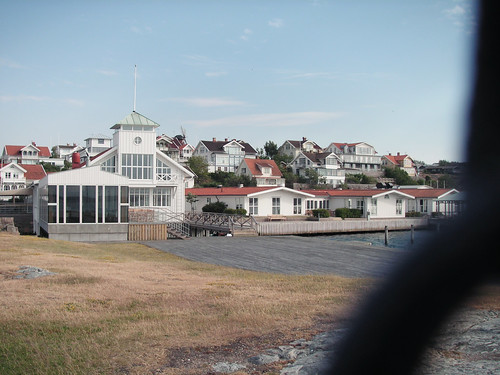
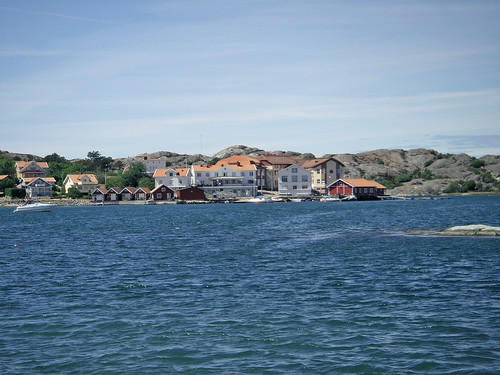
I'm in beautiful Fiskebäckskil on the Swedish west coast for the 5th Kristineberg symposium "Building Complex Brains" at the Kristineberg marine research station. We arrived yesterday to check into the hotel and enjoy the incredible welcome dinner, but the talks started this morning. The town is right by the sea, the hotel we're staying at is quite nice and the weather has been with us, warm and sunny, so I'm loving it so far. The research station has free WiFi, unlike the hotel, so I'm taking advantage of our extended lunch-break to get a few words down, upload some photos, check some e-mails and so on.

I'll expand on this post during the conference to comment on some of the talks I've heard today. So far, very very interesting stuff, and quite useful for my work. Looking forwards to the forthcoming 3 days of evolutionary neuroscience talks, nice food, sun, sea and socializing.

>Update June 12

The first session of the day was on the subject of evolutionary developmental biology or EvoDevo. I noticed that I'm a lot more familiar with "Evo" than with "Devo", those cell-types and developmental stages flew right over my head, but quite a lot of things stuck with me and very interesting stuff was presented. The second session was on neurotrophic factors, factors that regulate the survival and growth of neurons, a subject I'm not familiar with so it wasn't as rewarding.

I'll just quickly put down some brief impressions and thoughts on the talks that I found particularly interesting.

The first talk was on the evolution of different neuron types in the nervous system. The work presented by Detlev Arendt of the European Molecular Biology Laboratory in Heidelberg highlighted the importance of identifying and comparing homologous cell-types across animals, from the very simplest nervous systems in animals that diverged a long long time ago to the more complex ones in animals that diverged more recently (evolutionarily speaking), to understand how new functions and complexity emerged in the evolution of the nervous system. The focus was on the marine bristle worm Platynereis dumerilii.

The general pattern that appears is that in the early stages of nervous system evolution, neurons had multiple functions, then as these ancient multifunctional neurons generated new "daughter" neurons in evolution, the functions were distributed in a complementary way.

What's interesting for me, is that they have identified nerve cells that release the neuroendocrine peptides vasotocin, gonadotropin-releasing hormone and proopiomelanocortin in Platynereis dumerilii. These are hormones that serve a multitude of functions in our physiology, and there they are in a worm brain. Fantastic. Vasotocin is a member of the oxytocin/vasopressin protein family and since I'm studying the evolution of the oxytocin/vasopressin system in vertebrates, this insight is quite exciting. Obviously this system has a very interesting and very ancient history.

Going back to ancient neurons having multiple functions, the vasotocinergic neurons also express light-sensitive receptors, opsins, like the ones we use for seeing. Does this reflect the ancestral function of the hormones in the oxytocin/vasopressin family? Did this system originate as a signal in the regulation of circadan rhythm or time-of-day-dependent behavior? Are these vasotocinergic cells in Platynereis really the equivalent to the vertebrate oxytocin/vasopressin cells? They seem to express the same profile of genes, but I can't completely discard the thought that it could be a whole different cell type in the worm using the same basic gene "scaffold" as the vertebrate cells.

The next talk was probably the most rewarding because it involved an organism that's very interesting for my work - the lancelet or amphioxus, the most basal close relative of the vertebrates. Jordi Garcia Fernandez of the Universitat de Barcelona presented a perspective of what the study of the genome sequence of the lancelet might give us, in particular with regards to the evolution of the nervous system and body plans.

The position of the lancelet in the evolutionary tree of life makes it very important. By comparing its genome with vertebrate genomes we cover the entire scope of vertebrate evolution and gain the possibility to understand a lot about how the primitive organisms that would evolve into the vertebrates worked. The problem so far has been that the genome sequence has not been assembled; in the database that has been available you can only see a mess of fragmented pieces of sequence which makes you miss a lot of information. So it was very pleasing to hear that the assembled genome sequence as well as the release article will be published next week. I've done quite extensive searches in the database that is currently available, looking for the gene families I'm interested in, but it hasn't provided any information. Hopefully the assembled genome sequence and the first analysis will give me some answers. I'll hold on to some thoughts that came to me during this talk until I've had the chance to read the article on the preliminary analysis.

There was a very interesting sidestep during the talk about the concrete experimental possibilities that are opened up once you know more about the lancelet genome. By targeting the specific developmentally relevant genes and producing genetically engineered animals, it would be possible, at least in theory, to replicate what took millions of years of mutation and natural selection and generate typically vertebrate features in the lancelet. One such feature could be the development of limbs, for instance. It's a captivating idea, but only time will tell if its application lies anywhere in the near future.

A subsequent talk by Shigeru Kuratani of the RIKEN institution in Kobe treated another organism at a very pivotal point in the evolutionary tree - the lamprey. The lamprey, as it compares to other vertebrates, is the living representative of early vertebrate evolution. The lamprey brain lacks some of the features that characterize most vertebrate brains, so the questions that comes naturally is, when did particular features of the vertebrate brain arise and what does the lamprey brain actually reflect? I didn't understand a lot of the developmental biology involved, but it appears that the basic plan and gene expression of the vertebrate brain was already established by the time the first vertebrates came along, which is very interesting.

Even though I don't know much about neurotrophic factors, I found one of the talks in the second session quite interesting. Neurotrophins guide the growth of neurons and regulate neuron survival and death. This has consequences for the development of the nervous system but also for the plasticity of the brain, roughly its ability to adapt itself, memory and cognition. There are two models how brains are "built" - either a finite number of components are produced and put together in a determined fashion, much like a Lego set, or an excess of components are produced followed by a process of adjustment and trimming of the excess. It is in the latter model of brain development that neurotrophins play an important part. Alicia Hidalgo of the University of Birmingham, presented the finding of neurotrophins in the model organism of all model organisms, the fruit fly Drosophila. Invertebrate brains are generaly thought to lack neurotrophic factors, their brain development was regarded as a "Lego set", "hard wired" with little room for adjustment and plasticity. Finding this shared feature between an insect and "higher" organisms opens up for the thought that there is one basic "brain building" model and that it very early on included the foundation for the very advanced and adaptable brain that is present in vertebrates.

>Update June 13

I'm in the middle of a talk about fruit fly smell receptors - multitasking is my thing. The two sessions today have been about genomics, and sensory systems and behavior. The genomics session especially really touched on some pretty interesting questions; I'll update this post after dinner sometime if I have the energy. I updated yesterday's post this morning instead of last night 'cause dinner was so rich and plentiful and included ever re-filling glasses of wine as well as brandy after dessert, so we'll see what happens today.

I've uploaded more pictures on a Flick set; this one is of the research station where the symposium is held.


>Update June 14

Today, the last day, is all about the cortex and the evolution and development of the human brain. There is only time for one session in the morning before lunch and the departure from Fiskebäckskil. I think I'll have time to upload the rest of this post before then, and if not, possibly on the train or when I get back home.

The best talk of the day was held by Ann Butler of George Mason University on the subject of the evolution of the brain circuitry that is thought to underlie conscious experience and higher cognitive functions. In a way, the red thread through the presentation was sort of "the search for cognition" in non-human animals and what it could tell us about the evolution of our own cognition. Now, cognition is a very tricky thing to define - it's a typical problem of having the brain trying to understand itself - but a certain type of electrical activity in the networks that form connections between the brain cortex and thalamus, as well as certain anatomical features of the connections have been correlated to cognition. The cortex is the outermost and evolutionarily "newest" part of the brain, and the thalamus is a more central part that to a large extent functions as a sort of "relay station" of pathways.

The really interesting part is that these special features, or components of them, have been demonstrated in animals as diverse as birds, turtle, frog and fish. So it's possible to "test" the nerve networks thought to underlie cognition in ourselves to the equivalent ones in other animals. Especially birds have demonstrated astonishing cognitive abilities - there are some famous examples: "Betty the crow" can make hooks out of pieces of wire to collect a piece of food; Alex the African grey parrot could recognize colors and shapes as well as quantities up to six and maybe even had a concept of "zero", among other things. When one lines up a chart of the complex networks that are thought to underlie high cognitive functions in humans and birds, the similarities are striking. The challenge is to understand how the similarities and, importantly, the differences are telling, how to stimulate the experimental animal in a way that is relevant to it and make the proper comparisons, and what this as tells us about the evolutionary processes that gave rise to out cortex and our cognition.

The thread was taken up by the following speaker, Jon H. Kaas of Vanderbilt University, who talked about early mammal brains and what they can tell us about our own brains. The successive increase in brain size in our lineage, and the increase in the number of nerve cells that this entails, underlie the complex interactions and regional specializations that make our abilities possible. The comparative studies of small mammal brains, theoretically similar to the original early mammals' brains, could offer us clues to how our complex sensory and motor systems emerged - how we experience the world and how we react to it.

Finally, we heard from Svante Pääbo of the Max Planck Institute for Evolutionary Anthrolopogy in Leipzig on the subject of the genomic perspectives on human origins. I've written about his research on the FOXP2 gene before, but this was a more general talk, only using FOXP2 as an example. A lot of it was on the progress of the sequencing of a neandertal genome, but also of course about how comparative analyses of the human genome and the neandertal genome will shine a light on a very crucial point of our evolution. Will we be able to identify genes that were important in our evolution? Will we be be able to define what it is that makes us specifically human? It's difficult to pinpoint what makes us "so special" when more and more of those traits we jealously guarded as "ours" appear in traces in other animals - perhaps looking at the genome, rather than looking at our behaviors and abilities, will be the key. But to do so we need to know more about that last step in the road to where we are today.

Swedish blog tags: , , , ,
Technorati tags: , , , ,

March 03, 2008

FOXP2 and the evolution of speech

ResearchBlogging.orgI mentioned briefly in my post from yesterday that I prepared a literature seminar in the undergraduate neurobiology course for this past Thursday and Friday. It was on a very popular and well-developed topic that really doesn't merit much additional commentary. But since I spent so much time preparing for it I thought it would make sense to just very quickly type something down and produce an entry for the blog.

The subject was FOXP2 and the evolution of speech. FOXP2 is a gene that has been linked to some faculties of speech and language, the media going as far, as they do, as calling it "the speech gene". It isn't a terribly current or "right now" topic, but it highlights many aspects of evolutionary neuroscience and it spans everything from genetics and development to evolution to behavior and society so it lends itself to interesting discussion.

I wrote down some questions to use as a guidance in the discussion but I didn't hand them out to the students beforehand 'cause I thought that they'd be more free to take the discussion wherever they wanted, it being such a wide-spanning subject. Apparently that was a mistake. The first group of students was very quiet, frustratingly so, and I had to do most of the talking. I think they found the articles difficult. I can understand that, but they were supposed to be challenging. The purpose of the seminar is to give some training in critical reading of scientific literature. This does take some effort and maybe they would have needed some concise questions to guide them. I gave the second group the questions and 15 minutes to prepare some answers at the beginning of the seminar and they did so much better. So that's something to consider for the next time.

I centered the seminar around a general review article from a few years back, a couple of short reports on recent FOXP2 evolution, one of which is about the controversial subject of Neanderthal gene sequencing, and a really nice article from last year on FOXP2 in echolocating bats (first 4 references below). All the students got the review article and one half got the reports while the other half got the bat article. My thought was that we could take the discussion from the anthropocentric notion of FOXP2 having evolved in the human lineage to produce our "superior" faculties of speech and language and warp it towards bats and how FOXP2 seems to have evolved in their lineage as well to produce their unique use of vocalization for echolocation. Along the way we also discussed some general concepts of molecular evolution, the neuroanatomy of speech production, the definition of speech and language, the emergence of culture and the selective advantages of evolving such a complex means of communication.

First some introduction.

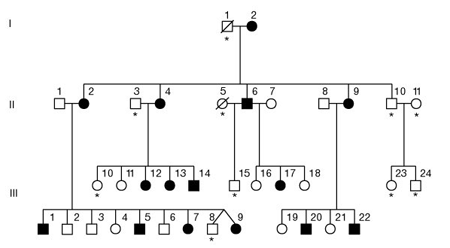
The FOXP2 gene was first identified through the study of the so called "KE family" in the late 90s. This is a family in which a severe speech and language disorder affects almost half of the members. This case was interesting because the disorder segregated from generation to generation in a pattern that pointed very decisively towards there being just one gene causing it. You can see a pedigree of the KE family below. Shaded symbols indicate affected individuals.


Ref: S.E. Fisher et. al (see reference below)

The researchers were able to identify the region on chromosome 7 that was associated with the speech disorder and subsequently they were able to identify the gene. Even though FOXP2 should not by any means be called "the speech gene", its identification and study has given us an "entry way" into the very complex processes that govern speech and ultimately perhaps language.

These are the questions I prepared for the seminar with my own answers, adapted for an undergraduate biology crowd.

1. What is the function of the FOXP2 gene product? How does it act?

FOXP2 is a transcription factor, a protein that binds to DNA and regulates the expression of a variety of specific genes. In the case of FOXP2 it's still unknown which ones. FOXP2 in particular represses the expression of genes. The fact that it's a transcription factor puts it in a place of particular interest for several reasons. (1) It makes it probable that it's central to the processes that underlie speech. (2) Small changes in a transcription factor can give rise to major innovations because they influence a wide variety of genes and thus functions. (3) Transcription factors have dual roles - they act during development, setting up structures and functions, as well as in the mature organism, regulating the same. This mirrors the complex development and plasticity of speech.

2. FOXP2 is an extremely conserved gene in vertebrates. What does this mean? Can you relate this fact to the FOXP2 protein function?

The word conserved means that there is very little sequence diversity between lineages. In other words, there is extremely little difference between the crocodile FOXP2, chicken FOXP2 and human FOXP2. Transcription factors are generally more conserved since they have a very basic function - even the smallest change could have enormous consequences since transcription factors regulate a wide variety of genes and functions, but also because they act during development.

3. FOXP2 was related to speech by the study of individuals with speech abnormalities (particularly the KE family). How are their FOXP2 genes aberrant?

The KE family has a substitution from arginine to histidine on position 553. This affects the DNA-binding region of the protein, leaving it useless. Another patient has a premature stop codon that leaves the protein too short to function and yet another patient has a translocation in the region containing the gene.

4. Why is it useful to study FOXP2 in vocal learning birds and bats? What are the main findings in this regard?

The implication of FOXP2 in brain regions involved in bird song learning are considered parallel to the human vocal learning of language. Young birds, just like us, mimic the sounds that adults make in order to learn them. It has been found that FOXP2 expression is increased in periods of song learning. These seasonal periods of plasticity could mirror the development of the neural circuits that make vocal learning possible. However no specific mutations have been related to this specific ability (including the study of vocal learning echolocating bats) and expression sites of FOXP2 are not different when comparing vocal learners with non-vocal learners.

5. In which brain regions is FOXP2 expressed? To what faculties of speech and language can you relate FOXP2 expression?

FOXP2 is expressed in similar and partly overlapping regions in all vertebrates studied, mainly in cerebellar and basal ganglia circuits. Regions include the lateral ganglionic eminence in the developing brain which gives rise to the striatal medium spiny projection neurons, involved in planning and modulation of movement; thalamus, in particular the regions that receive input from the basal ganglia; the inferior olives, which are part of the cerebellar motor learning and function; cerebellar Purkinje cells and deep cerebellar nuclei as well as sensory auditory midbrain structures. These regions implicate FOXP2 in the fine sensorimotor coordination/integration which underlies the sequenced behavior and learning behind speech and language.

FOXP2 is not expressed in the structures that form the trigeminal sensorimotor circuit that controls orofacial movements. So FOXP2 apparently has nothing to do with the control of the movements of the mouth and lower face, but rather with the coordination, planning and learning of these movements.

6. How is the human FOXP2 gene different from that of our closest extant relative the chimpanzee? What consequence does this have for the human FOXP2 protein function?

The human FOXP2 gene has two characteristic amino acid substitutions in exon 7 compared to the chimpanzee gene - a threonine to asparagine substitution in position 303 and an asparagine to serine substitution on position 325. The latter substitution leads to a hypothetical target site for protein kinase C and a minor structural change. Phosphorylation of transcription factors is an important way of regulating gene expression. Even this small difference between humans and chimpanzees could lead to a dramatic change in the regulations of the variety of genes that are under the control of FOXP2.

7. Has the human FOXP2 gene been under any selective pressure? How can we see this?

It seems as though the human FOXP2 gene has been under recent positive selection rather than relaxed negative selection. This means that whatever changes the human-specific mutations caused, they gave significant benefits to the individuals that carried them. This could be seen by studying the FOXP2 gene sequences in mouse, great apes and human and comparing non-synonymous substitutions, mutations that change the amino-acid sequence of the protein, with synonymous substitutions, mutations that don't.

8. The Neanderthal FOXP2 gene seems to be identical to that of modern humans. With other primates in mind, what consequences does this have for the expansion of modern humans?

This is a very big and very open discussion that in the end is more speculative than anything, albeit based on actual scientific findings. The question seems to be whether or not the emergence of a complex language lead to our cultural and therefore geographical and demographical expansion? It's definitely tempting to draw the conclusion that we became so successful because we evolved a language that allowed us to cooperate between individuals like never before. The human-specific mutations in FOXP2 may very well have been a pivotal point in this development. If Neanderthals had the same FOXP2 sequence as us modern humans, it's probable that they possessed many of the same faculties of language and culture that we do. Maybe at one time in history we understood each other?

9. In what way is FOXP2 special in echolocating bats? Can this provide any clues with regards to FOXP2 function? Can this be contrasted to FOXP2 in echolocating whales?

FOXP2 has diverged more in echolocating bats than any other group of vertebrates. This further implicates FOXP2 in sensorimotor coordination and vocal learning, which are requirements for echolocation. The same pattern could not be seen for echolocating whales, presumably because their echolocation is mediated through their foreheads and would not require sensorimotor coordination of their mouth and face.

10. Using what you have learned about FOXP2 in humans, birds, bats, whales and other animals, what can you say about the evolution of vocal communication and language? Is language a uniquely human feature?

This is yet another very big and very open discussion. Arguably, many animals possess some of the faculties of our speech and language. Most animals vocalize, for instance, even though it's only growls, barks, meows, shrieks, squeaks et.c. As we've seen, some learn their complex vocalization patters by mimicking adults, just like we do, and some even have more complex systems where different sounds are connected to different meanings. A few species of monkeys can distinguish between different predators and warn their fellow group-members accordingly.

But is this language then?

I would say no. The best definition I know of language is "the ability to produce infinite meaning from a finite sent of sounds or symbols", and this is clearly a human-specific feature, as far as our best knowledge goes. With our language we are able to describe not only that which we can sense, but also a wide spenctrum of things we cannot sense at all! Even things that are completely invented. We use language not only for utility but also creatively to make things up. We can even make up words that have no meaning attached to them.

Still, the fact that other animals possess some faculties of speech is significant because it firmly bases our unique adaptation of language and culture within natural processes by showing that a stage was already set from which a few genomic events could lead to our advanced use of vocalization.

Swedish blog tags: , , ,
Technorati tags: , , , ,

Scharff, C., Haesler, S. (2005). An evolutionary perspective on FoxP2: strictly for the birds?. Current Opinion in Neurobiology, 15(6), 694-703. DOI: 10.1016/j.conb.2005.10.004

Enard, W., Przeworski, M., Fisher, S.E., Lai, C.S., Wiebe, V., Kitano, T., Monaco, A.P., Pääbo, S. (2002). Molecular evolution of FOXP2, a gene involved in speech and language. Nature, 418(6900), 869-872. DOI: 10.1038/nature01025

Krause, J., Lalueza-Fox, C., Orlando, L., Enard, W., Green, R., Burbano, H., Hublin, J., Hänni, C., Fortea, J., de la Rasilla, M., Bertranpetit, J., Rosas, A., Pääbo, S. (2007). The Derived FOXP2 Variant of Modern Humans Was Shared with Neandertals. Current Biology, 17(21), 1908-1912. DOI: 10.1016/j.cub.2007.10.008

Li, G., Wang, J., Rossiter, S.J., Jones, G., Zhang, S. (2007). Accelerated FoxP2 Evolution in Echolocating Bats. PLoS ONE, 2(9), e900. DOI: 10.1371/journal.pone.0000900

Fisher, S.E., Vargha-Khadem, F., Watkins, K.E., Monaco, A.P., Pembrey, M.E. (1998). Localisation of a gene implicated in a severe speech and language disorder. Nature Genetics, 18(2), 168-170. DOI: 10.1038/ng0298-168

Cecilia S. L. Lai, Simon E. Fisher, Jane A. Hurst, Faraneh Vargha-Khadem, Anthony P. Monaco (2001). A forkhead-domain gene is mutated in a severe speech and language disorder Nature, 413 (6855), 519-523 DOI: 10.1038/35097076